
MTD Readiness: What Every SME Needs to Know
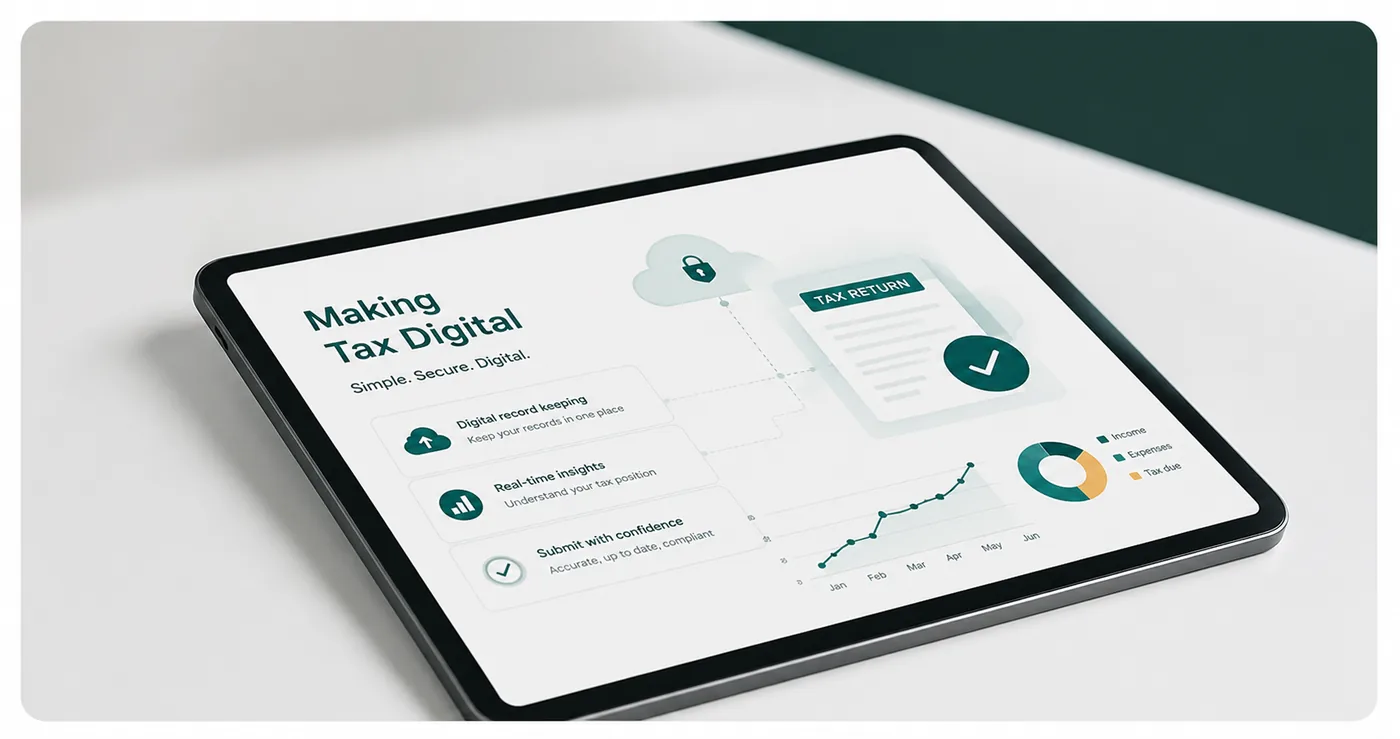
Making Tax Digital for Income Tax is the next major change to how sole traders and landlords report income to HMRC. From April 2026, those with more than £50,000 in qualifying income will need to keep digital records, submit quarterly updates, and complete a final digital declaration through compatible software.
The reason SMEs are searching for it now is simple. The first deadline is close, the rules are more involved than many expected, and HMRC will not automatically move taxpayers across. Businesses need to know whether they are in scope, what software they need, and how to build digital record-keeping into their normal routine before the change becomes mandatory.
Who MTD for Income Tax Applies To
If you want to check your position before reading the full guide, download our MTD readiness checklist for SMEs. It will help you work out whether MTD may apply to you, what records you need, and what steps to take before your deadline.
MTD for Income Tax applies to self-employed individuals and landlords with qualifying income from sole trade, property income, or both.
The rollout is phased by income level:
- From April 2026, MTD applies to those with qualifying income above £50,000.
- From April 2027, it applies to those with qualifying income above £30,000.
- From April 2028, it applies to those with qualifying income above £20,000.
Source: HMRC
Qualifying income means gross income before expenses. For most people, this includes sole-trade turnover and gross rental income from UK property. It does not include employment income, dividends, savings interest, pension income, capital gains or partnership income.
What about limited companies and partnerships?
MTD for Income Tax does not currently apply to limited companies. It also has not yet been legislated for partnerships.
For now, the rules are focused on self-employed individuals and landlords. Limited companies may already be familiar with Making Tax Digital if they are VAT-registered, but MTD for Income Tax is a separate regime.
Source: HMRC / House of Commons Library
What changes under MTD?
The main change is that affected taxpayers will need to keep digital records and report income and expenses to HMRC more regularly.
1. Digital record-keeping
Paper records will no longer be enough. Income and expenses must be kept digitally using compatible software.
2. Quarterly updates
Taxpayers will send summary updates to HMRC every quarter. These are not four separate tax returns. They are year-to-date updates based on the digital records held in the software.
3. Final declaration
After the end of the tax year, taxpayers will make any year-end adjustments, claim reliefs and complete their final declaration through the software.
Source: HMRC
Will tax payment dates change?
No. MTD changes how income and expenses are recorded and reported, but it does not change the main tax payment dates.
Income Tax will still be due by 31 January following the end of the tax year. Payments on account will still be due on 31 January and 31 July where they apply.
Source: HMRC
What happens if you miss a deadline?
MTD sits alongside a newer points-based penalty system. Instead of an automatic fixed penalty for a single missed filing deadline, taxpayers receive penalty points for missed submission obligations. A financial penalty is charged once the points threshold is reached.
Late payment penalties are separate and can apply when tax is paid late.
Source: HMRC
What SMEs should do now
The businesses that will find MTD easiest are those that prepare before the deadline applies to them.
The key steps are:
1. Check your income
Review your latest Self Assessment return and work out whether your gross qualifying income brings you into scope.
2. Choose compatible software
You will need software that can keep digital records and send MTD updates to HMRC. This might be a cloud accounting package or bridging software if you currently use spreadsheets.
3. Start keeping digital records
Even if you are not yet mandated, moving records into a digital system now will make the transition easier.
4. Register for MTD
Taxpayers within scope need to sign up. HMRC will not simply move everyone across automatically.
5. Speak to your accountant
MTD introduces new processes and new deadlines. An accountant can help confirm whether you are affected, choose the right software and set up a process that works in practice.
Source: HMRC
For a practical step-by-step version, use our MTD readiness checklist for SMEs to review your income, software, digital records and key preparation steps.
The Bottom Line
MTD is no longer a future concern. It is already underway for sole traders and landlords above the first income threshold, and the number of people affected will increase as the thresholds reduce in 2027 and 2028.
The best time to prepare is before MTD becomes a deadline problem. Reviewing your income, choosing the right software and getting used to digital record-keeping now will make the change far easier to manage.
If you are unsure whether MTD applies to you, or you would like support getting ready, get in touch with The Green Accountants. We can help you understand your position, choose the right tools and build a process that keeps you compliant without unnecessary stress.
Sources
HMRC / GOV.UK — Making Tax Digital for Income Tax
https://www.gov.uk/government/collections/making-tax-digital-for-income-tax
HMRC / GOV.UK — Find out if and when you need to use Making Tax Digital for Income Tax
https://www.gov.uk/guidance/find-out-if-and-when-you-need-to-use-making-tax-digital-for-income-tax
HMRC / GOV.UK — Work out your qualifying income for Making Tax Digital for Income Tax
https://www.gov.uk/guidance/work-out-your-qualifying-income-for-making-tax-digital-for-income-tax
HMRC / GOV.UK — Use Making Tax Digital for Income Tax
https://www.gov.uk/guidance/use-making-tax-digital-for-income-tax
HMRC / GOV.UK — Sign up for Making Tax Digital for Income Tax
https://www.gov.uk/guidance/sign-up-for-making-tax-digital-for-income-tax
HMRC — Making Tax Digital for Income Tax: Quarterly updates
https://makingtaxdigital.campaign.gov.uk/quarterly-updates/
HMRC / GOV.UK — Penalties for Making Tax Digital for Income Tax
https://www.gov.uk/guidance/penalties-for-making-tax-digital-for-income-tax
House of Commons Library — Making Tax Digital: Developments since 2020
https://commonslibrary.parliament.uk/research-briefings/cbp-10573/
National Audit Office — Progress with Making Tax Digital
https://www.nao.org.uk/reports/progress-with-making-tax-digital/

Home
About
Contact
© 2026 The Green Accountants Ltd. All rights reserved.